
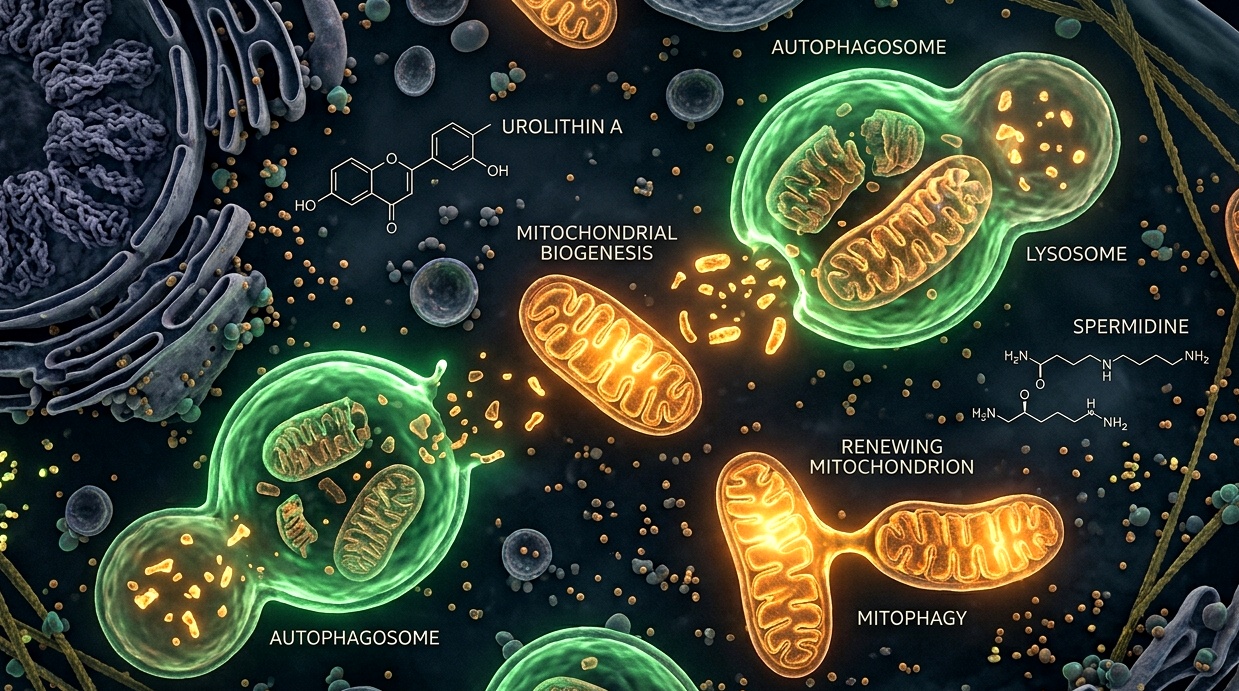
- The EP300 Enzymatic Brake: Spermidine triggers cellular autophagy independently of the mTOR pathway by competitively inhibiting the acetyltransferase enzyme EP300, hyperacetylating autophagy-related gene (ATG) transcription factors.
- Age-Dependent Polyamine Collapse: Endogenous spermidine levels decline precipitously in human tissues after age 30. High dietary or supplemental spermidine intake is epidemiologically correlated with a 5.7-year increase in survival probability in prospective population cohorts.
- Wheat Germ vs. Synthetic Dosing: Commercial wheat germ extracts typically yield 1mg to 3mg of elemental spermidine per gram of extract. Human clinical trials demonstrate cognitive and cardiovascular benefits at elemental thresholds between 1.0 mg and 6.0 mg daily.
Autophagy—the lysosomal degradation and recycling of damaged cellular organelles, misfolded protein aggregates, and dysfunctional mitochondria—is the foundational biological housekeeper of human longevity. As cellular senescence progresses, autophagic efficiency slows, leading to the accumulation of toxic cellular debris and accelerated phenotypic aging.
While extended fasting and intense exercise are potent physiological autophagy triggers, nutritional pharmacology has focused on naturally occurring polyamines. Among these, spermidine has emerged as the most rigorously validated caloric restriction mimetic capable of inducing systemic autophagy without nutrient deprivation.
Pharmacological Matrix: Spermidine vs. Caloric Restriction Mimetics
| Mechanism / Parameter | Spermidine (Polyamine) | Rapamycin / Urolithin A |
|---|---|---|
| Primary Molecular Target | EP300 Histone Acetyltransferase Inhibition | mTORC1 Allosteric Inhibition / PINK1-Parkin Activation |
| Pathway Dependency | mTOR-independent (Can be triggered in fed state) | Strictly mTOR-dependent (Suppresses anabolic signaling) |
| Safety & Immunosuppression Risk | Zero immunosuppression; GRAS dietary component | Rapamycin carries infection & glucose intolerance risks |
| Human Clinical Dose Range | 1.0 – 6.0 mg elemental spermidine daily | 500 – 1,000 mg Urolithin A daily |
| Key Clinical Endpoints | Memory consolidation, cardiovascular arterial elasticity, hair growth | Mitochondrial biogenesis, muscle strength endurance |
The EP300 Epigenetic Switch: Autophagy Without Muscle Wasting
Most pharmacological autophagy activators (such as pharmaceutical rapamycin or high-dose berberine) achieve their effects by suppressing mTORC1 (mechanistic target of rapamycin). While effective at triggering cellular cleanup, chronic mTOR inhibition can impair muscle protein synthesis, retard wound healing, and provoke systemic insulin resistance.
Spermidine sidesteps this trade-off completely. It functions via competitive inhibition of EP300, an acetyltransferase enzyme that normally suppresses autophagic genes. By deactivating EP300, spermidine allows the deacetylation of essential autophagy machinery—including ATG5, ATG7, and LC3-II—initiating autophagosome formation and lysosomal fusion without shutting down anabolic muscle pathways.
For individuals stacking longevity compounds targeting mitochondrial bioenergetics alongside autophagy, see our clinical guide on Cellular Autophagy & Mitochondrial Biogenesis: Urolithin A, Spermidine & NAD+.
Navigating Supplement Labels: Extract Weight vs. Elemental Polyamine
The biggest consumer pitfall in spermidine supplementation is confusing raw wheat germ extract weight with actual elemental spermidine:
- Standard Wheat Germ: Contains approximately 0.1mg to 0.2mg of spermidine per gram. Eating 2 tablespoons of unrefined wheat germ provides ~1mg of spermidine.
- Standardized Extracts: Concentrated extracts (like SpermidineLIFE®) standardize to 1mg of elemental spermidine per 1,000mg of extract (0.1% concentration).
- Synthetic Trihydrochloride: Delivers ultra-high purity (~98% pure spermidine), but requires precise pharmaceutical micro-gram dosing to prevent excessive polyamine pool expansion.
For metabolic optimization, pairing polyamine protocols with glucose disposal agents is analyzed in Berberine vs. Metformin & Dihydroberberine in 2026.
Frequently Asked Questions (Clinical PAA Direct Answers)
Yes. While spermidine prevents cancer initiation in healthy cells by clearing damaged genomic DNA via autophagy, rapidly dividing neoplastic cancer cells hijack polyamine pathways to sustain accelerated cellular proliferation. High-dose polyamine supplementation is contraindicated in patients with diagnosed active malignancies unless prescribed by an oncologist.
The richest whole-food sources of spermidine include wheat germ (240 mg/kg), aged cheeses like Parmigiano-Reggiano (150 mg/kg), fermented natto (120 mg/kg), shiitake mushrooms (90 mg/kg), and green peas (65 mg/kg). Consuming a Mediterranean-style diet naturally yields 10–15 mg of total polyamines daily.
Pure synthetic spermidine or zero-calorie polyamine capsules contain zero macronutrients and do not spike insulin or break a fast. In fact, because spermidine synergizes with fasting-induced autophagy via EP300 inhibition, taking spermidine during a fasting window amplifies autophagic flux.
As tissue polyamine pools naturally degrade after age 30, supplementing with standardized elemental Spermidine (1.0 to 3.0 mg daily) provides an elegant, safe, and clinically validated method to preserve basal autophagic housekeeping. Because it acts via EP300 rather than blunt mTOR suppression, it delivers long-term neuroprotection and cardiovascular longevity without compromising lean muscle mass or athletic recovery.