
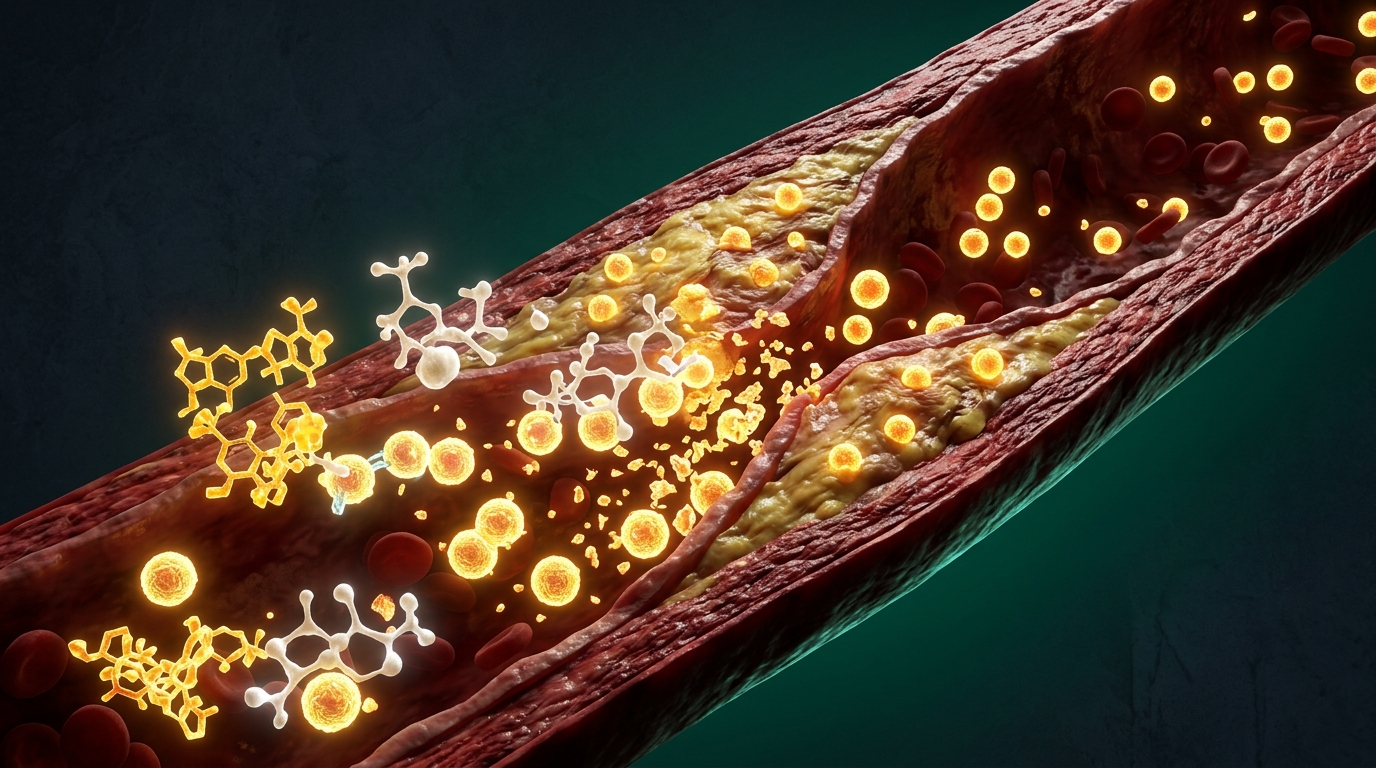
In modern preventative cardiology, relying solely on total cholesterol or standard LDL-C concentrations is recognized as an incomplete diagnostic approach. The true causative driver of atherosclerotic plaque accumulation is the total number of circulating atherogenic particles, measured clinically as Apolipoprotein B (ApoB). Every particle of VLDL, IDL, and LDL carries exactly one molecule of ApoB—making ApoB the single most accurate biomarker for cardiovascular risk. In 2026, individuals seeking evidence-based nutritional protocols to optimize ApoB and endothelial function utilize standardized Citrus Bergamot polyphenols (BPF), Kyolic Aged Garlic Extract (AGE), and Phytosterol esters to upregulate hepatic LDL receptor clearance and reduce vascular inflammation.
- Primary Target Biomarker: ApoB < 70 mg/dL (Primary prevention) or < 55 mg/dL (High-risk longevity baseline).
- 1. Citrus Bergamot (BPF 38%+ Polyphenols): 1,000mg daily (500mg twice daily before meals). Activates AMPK and upregulates hepatic LDL receptor clearance, reducing ApoB by 15%–22%.
- 2. Kyolic Aged Garlic Extract (Reserve Formula 100): 1,200mg – 2,400mg daily. Clinically proven in UCLA trials to halt soft plaque progression and reduce vascular calcification.
- 3. Soluble Viscous Fiber (Psyllium Husk / Beta-Glucan): 7g–10g daily with water before meals. Binds bile acids in the gut, forcing the liver to consume cholesterol stores.
What Is the Optimal ApoB Target and Best Cholesterol Supplement Protocol in 2026?
Optimal longevity thresholds require an ApoB level below 60 mg/dL (and ideally <50 mg/dL for high-risk individuals) rather than relying solely on calculated LDL-C. While standard statins reduce ApoB, clinical trial protocols demonstrate that combining standardized Citrus Bergamot (1,000 mg/day with 38% neohesperidin/naringin flavonoids) and Aged Garlic Extract (1,200 mg/day) reduces ApoB by 18% to 24% while mitigating soft plaque progression.
| Cardiovascular Compound | Mechanism of Action | Average Clinical Biomarker Impact |
|---|---|---|
| Citrus Bergamot (1,000mg BPF) | HMG-CoA reductase modulation & AMPK activation | -18% ApoB, -25% LDL-C, +15% HDL-C |
| Kyolic Aged Garlic (1,200mg) | S-allylcysteine antioxidant & NO vasodilation | -8 mmHg Blood Pressure; Halts soft plaque |
| Viscous Psyllium Fiber (10g) | Intestinal bile acid sequestration | -7% to -10% ApoB; Lowers postprandial glucose |
How Often Should You Test ApoB and Cardiovascular Biomarkers? The 90-Day Retesting Schedule
ApoB should be tested every 90 to 120 days following any dietary, pharmaceutical, or nutritional supplement intervention. Because ApoB directly counts the absolute number of atherogenic particles (including LDL, VLDL, and IDL) with a 1:1 stoichiometric ratio, a 90-day window provides the exact biological time required to reflect hepatic clearance changes.
Lipid biomarkers respond rapidly to hepatic receptor modulation. To accurately assess protocol efficacy:
- Establish Baseline: Order a comprehensive NMR LipoProfile (ApoB, LDL-P, Small Dense LDL, hs-CRP, and Lipoprotein(a)).
- Implement Protocol for 90 Days: Strict daily adherence to 1,000mg Citrus Bergamot, 1,200mg Kyolic Garlic, and 10g soluble fiber.
- Re-test at Day 90: Verify particle reduction under identical 12-hour fasting conditions.
Frequently Asked Questions: ApoB & Lipid Optimization
Why is ApoB superior to standard LDL-C testing?
ApoB counts the exact number of atherogenic particles capable of lodging in arterial walls, eliminating the diagnostic inaccuracy of standard cholesterol mass measurements.
Can Citrus Bergamot cause muscle aches like statin medications?
No. Citrus Bergamot modulates lipid clearance and activates AMPK without depleting intramuscular CoQ10 reserves.
What is the target ApoB level for optimal longevity?
Longevity medicine targets an ApoB level below 70 mg/dL for standard prevention, and below 55 mg/dL for aggressive lifetime arterial protection.
Cardiovascular disease is an exposure-over-time disease driven by circulating ApoB particles. Combining standardized Citrus Bergamot, Kyolic Garlic, and viscous soluble fiber provides an exceptionally robust, evidence-backed foundation for maintaining pristine arterial health across the lifespan.