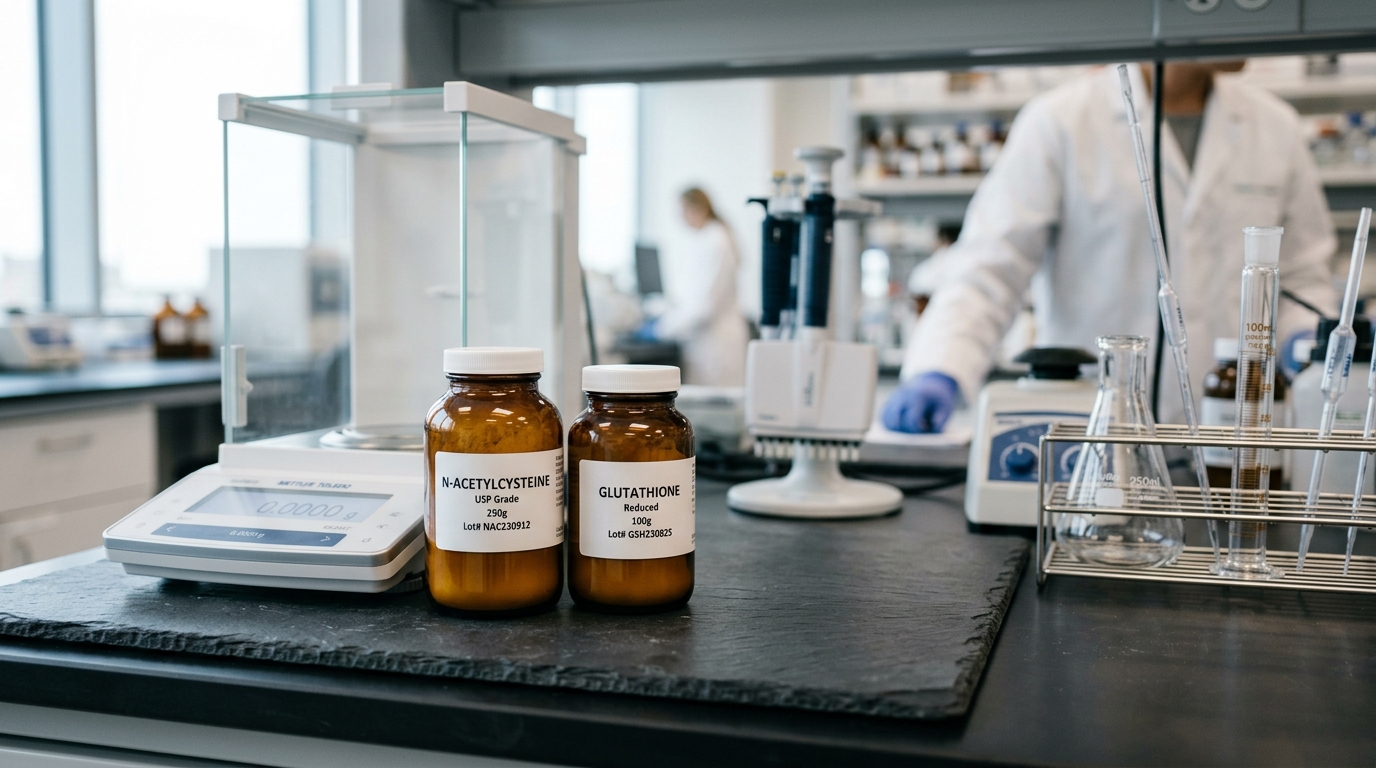
- The Rate-Limiting Bottleneck: N-Acetylcysteine (NAC) bypasses gastrointestinal degradation to donate L-cysteine, the primary rate-limiting amino acid for endogenous glutathione synthesis via glutamate-cysteine ligase (GCL).
- Direct Phospholipid Delivery: Standard oral reduced glutathione exhibits near-zero bioavailability due to intestinal gamma-glutamyl transferase (GGT) cleavage. Liposomal encapsulation protects the tripeptide inside phospholipid bilayers, delivering intact glutathione directly into lymphatic and portal circulation.
- Clinical Stratification: NAC (600–1,200 mg) is superior for pulmonary mucosal thinning, hepatic acetaminophen clearance, and central glutamate modulation. Liposomal Glutathione (250–500 mg) is mandatory in patients with compromised transsulfuration, severe mitochondrial exhaustion, or chronic chemical toxicities.
Glutathione (gamma-L-glutamyl-L-cysteinylglycine, or GSH) serves as the master endogenous antioxidant, mediating Phase II hepatic conjugation, mitochondrial ROS quenching, and cytotoxic xenobiotic clearance. As systemic oxidative stress and environmental toxic loads escalate, clinicians are routinely confronted with a pivotal protocol decision: should you stimulate endogenous cellular synthesis using the precursor N-Acetylcysteine (NAC), or administer direct Liposomal Glutathione?
Answering this question requires examining the enzymatic machinery of the transsulfuration pathway, intestinal brush-border peptidase degradation, and cellular feedback inhibition mechanisms.
Biochemical Comparison Matrix: Precursor vs. Encapsulated Master Peptide
| Clinical Parameter | N-Acetylcysteine (NAC) | Liposomal Reduced Glutathione |
|---|---|---|
| Molecular Classification | Acetyl-derivative of L-cysteine (Precursor) | Intact tripeptide (Glu-Cys-Gly) in phospholipid vesicle |
| Oral Bioavailability Profile | Moderate (~10% intact; rapid deacetylation to cysteine) | High (Bypasses peptidase cleavage via lymphatic chylomicrons) |
| Enzymatic Dependency | Requires functional GCL & GS enzymes + ATP | Direct delivery; zero endogenous synthesis dependency |
| Negative Feedback Regulatory Loop | Subject to GCL inhibition when intracellular GSH is saturated | Bypasses GCL feedback inhibition completely |
| Secondary Clinical Benefits | Mucolytic (cleaves disulfide bonds), modulates glutamate (cystine-glutamate antiporter) | Phosphatidylcholine co-delivery (membrane repair, methylation support) |
The Enzymatic Cascade: How NAC Drives Intracellular GSH Synthesis
Endogenous glutathione synthesis is a two-step ATP-dependent enzymatic process. In the first and rate-limiting step, glutamate-cysteine ligase (GCL) couples glutamate with cysteine to form gamma-glutamylcysteine. Because intracellular cysteine concentrations are maintained at very low levels to prevent cellular toxicity, cysteine availability is the definitive limiting constraint on how much glutathione a cell can synthesize.
NAC delivers a stable, bioavailable source of L-cysteine. Once inside the hepatocyte or neuron, the acetyl moiety is cleaved, supplying the substrate needed for GCL. However, when intracellular GSH reaches physiological capacity (~5–10 mM in liver tissue), GSH exerts negative feedback allosteric inhibition on GCL. This is an evolutionary safety switch: NAC will never push cellular glutathione above normal physiological ceilings.
For individuals optimizing methylation bloodwork alongside transsulfuration pathways, ensuring adequate cofactors like B6 (P5P) and methyl donors is critical, as detailed in our guide on Comprehensive Homocysteine & Methylation Bloodwork Protocols.
Why Plain Oral Glutathione Fails & Liposomes Succeed
For decades, conventional wisdom held that oral glutathione supplementation was clinically futile. The intestinal enterocytes express heavy concentrations of the brush-border enzyme gamma-glutamyl transferase (GGT). When unencapsulated GSH enters the gut lumen, GGT rapidly hydrolyzes the peptide bond between glutamate and cysteine, breaking it down into free amino acids before systemic absorption can occur.
Liposomal encapsulation fundamentally rewires this transport mechanism. By enclosing reduced GSH inside spherical nano-vesicles composed of sunflower or soy phosphatidylcholine bilayers, the molecule is shielded from digestive enzymes. These liposomes are taken up through M-cells in Peyer’s patches and enter the intestinal lymphatic system, bypassing first-pass hepatic metabolism and elevating systemic RBC glutathione levels by up to 35% in published randomized controlled trials.
For longevity protocols targeting cellular turnover and mitochondrial biogenesis, pairing glutathione with mitophagy activators is covered in our breakdown of Cellular Autophagy & Mitochondrial Biogenesis Protocols.
Frequently Asked Questions (Clinical PAA Direct Answers)
Yes. NAC possesses moderate chelating affinity for divalent trace minerals, particularly zinc and copper. Long-term supplementation with high doses of NAC (exceeding 1,200 mg daily for over 3 months) can increase urinary excretion of zinc. Clinicians recommend cycling NAC (e.g., 5 days on, 2 days off) or co-administering 15–30 mg of zinc bisglycinate spaced at least 4 hours apart from NAC dosing.
Standard serum glutathione is clinically unreliable because extracellular GSH is rapidly oxidized. The most accurate biomarkers are Red Blood Cell (RBC) Glutathione (measuring intracellular GSH vs. GSSG ratios), serum Gamma-Glutamyl Transferase (GGT) (elevated levels indicate cellular glutathione depletion), and urinary Pyroglutamate (5-oxoproline), which spikes during severe transsulfuration bottlenecks.
Yes. NAC has two unique therapeutic actions independent of glutathione: it acts as a direct mucolytic by cleaving disulfide bonds in thick respiratory mucus, and it modulates brain glutamate by stimulating the glial cystine-glutamate antiporter (System xc-), reducing compulsive behaviors, addictive cravings, and excitotoxicity in neuropsychiatric conditions.
For everyday longevity maintenance, respiratory support, and healthy liver conjugation, NAC (600–1,200 mg daily) provides an exceptionally cost-effective, self-regulating protocol. However, during acute illness, chronic inflammatory conditions, severe mold or heavy metal exposure, or in individuals with genetically sluggish transsulfuration enzymes, the body cannot convert cysteine fast enough. In these scenarios, Liposomal Reduced Glutathione (250–500 mg daily) is non-negotiable to bypass synthesis bottlenecks and restore cellular redox balance immediately.