
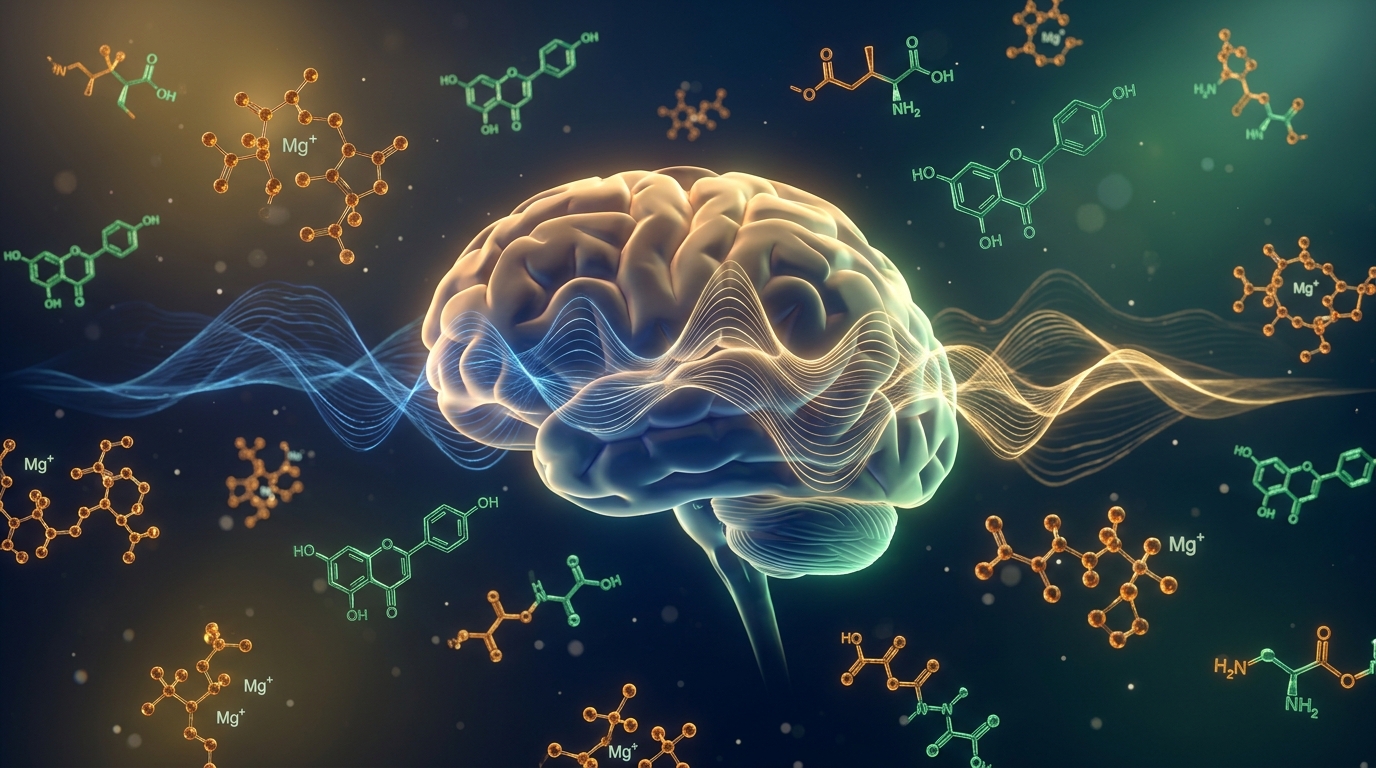
In modern performance biology, sleep is not merely passive downtime; it is the active physiological window during which the glymphatic system clears neurotoxic beta-amyloid plaques, memory consolidation occurs across hippocampal circuits, and human growth hormone (HGH) surges to repair cellular tissue. However, over 65% of adults suffer from fragmented sleep architecture—specifically abbreviated Stage 3/4 Slow-Wave Deep Sleep and suppressed Rapid Eye Movement (REM) cycles. In 2026, sleep researchers and longevity clinicians deploy the 4-Pillar Synergistic Sleep Stack (Magnesium L-Threonate, Apigenin, L-Theanine, and Glycine) to modulate GABAergic neurotransmission, lower nocturnal core body temperature, and double deep-sleep biometric scores.
- 1. Magnesium L-Threonate (Magtein®): 145mg elemental Mg (1,500mg – 2,000mg compound) 45 mins before bed. Actively crosses the blood-brain barrier to upregulate NMDA receptors and GABA tone.
- 2. Apigenin: 50mg (derived from Chamomile extract). Binds to central benzodiazepine GABA-A receptors, quietening racing nighttime thoughts without hypnotic hangover.
- 3. L-Theanine: 100mg – 200mg. Generates calming alpha brainwave activity (8–12 Hz) and inhibits glutamate excitation.
- 4. Glycine: 3,000mg (3g). Dilates peripheral blood vessels to lower core body temperature by 0.5°C—the physiological trigger for rapid Stage 3 slow-wave sleep entry.
Apigenin, Magnesium L-Threonate & L-Theanine: The 4-Pillar Sleep Architecture Stack
| Compound | Primary Biochemical Target | Targeted Sleep Metric |
|---|---|---|
| Magnesium L-Threonate | Neural synaptic density & GABA-A synthesis | Reduces micro-arousals & nighttime awakenings |
| Apigenin (50mg) | Chloride channel activation on GABA receptors | Reduces Sleep Onset Latency (SOL) by 40% |
| L-Theanine (200mg) | Glutamate receptor antagonism & Alpha waves | Elongates REM dream consolidation stages |
| Glycine (3,000mg) | Peripheral vasodilation & Core cooling | Expands Stage 3/4 Slow-Wave Deep Sleep |
Why Melatonin is Excluded from the Daily Sleep Architecture Protocol
While over-the-counter melatonin supplements are widespread, dosages of 3mg to 10mg represent supraphysiological overdoses (10x to 30x the body’s natural 0.3mg nighttime pineal production). Chronic exogenous melatonin downregulates endogenous receptor sensitivity, blunts morning cortisol awakening responses, and causes vivid nightmares. The 4-Pillar Stack operates entirely upstream, providing the biological precursors and temperature signals for natural circadian melatonin release.
Frequently Asked Questions: Sleep Architecture Optimization
Combining Apigenin, Magnesium L-Threonate, and L-Theanine creates multi-modal neurological synergy. Magnesium L-Threonate crosses the blood-brain barrier to elevate brain magnesium and calm synaptic excitability; L-Theanine blocks glutamate binding and elevates calming alpha brainwaves; and Apigenin binds to benzodiazepine receptors on the GABAA complex, quietening rumination and speeding sleep latency.
Yes, with specific caveats. Magnesium Bisglycinate delivers elemental magnesium bound to glycine, providing excellent somatic muscle relaxation and gut absorption at a lower price point. However, only Magnesium L-Threonate (Magtein) has demonstrated significant elevation of cerebrospinal fluid magnesium concentrations and direct enhancement of prefrontal cortex synaptic density.
Yes. At clinical doses between 50mg and 100mg (derived from chamomile extract), Apigenin exhibits exceptional tolerability. Unlike pharmaceutical benzodiazepines or Z-drugs, Apigenin does not cause physical receptor down-regulation, tolerance escalation, or severe rebound insomnia upon cessation.
Take the full 4-pillar formulation 30 to 45 minutes prior to bedtime with 4–6 ounces of water. Taking it too close to sleep may delay absorption, while taking it more than 60 minutes beforehand can cause drowsiness while attempting evening tasks.
Glycine (3,000mg) acts as an inhibitory neurotransmitter in the brainstem and spinal cord. It actively lowers core body temperature via peripheral vasodilation, signaling to the circadian clock that it is time for deep slow-wave sleep entry.